

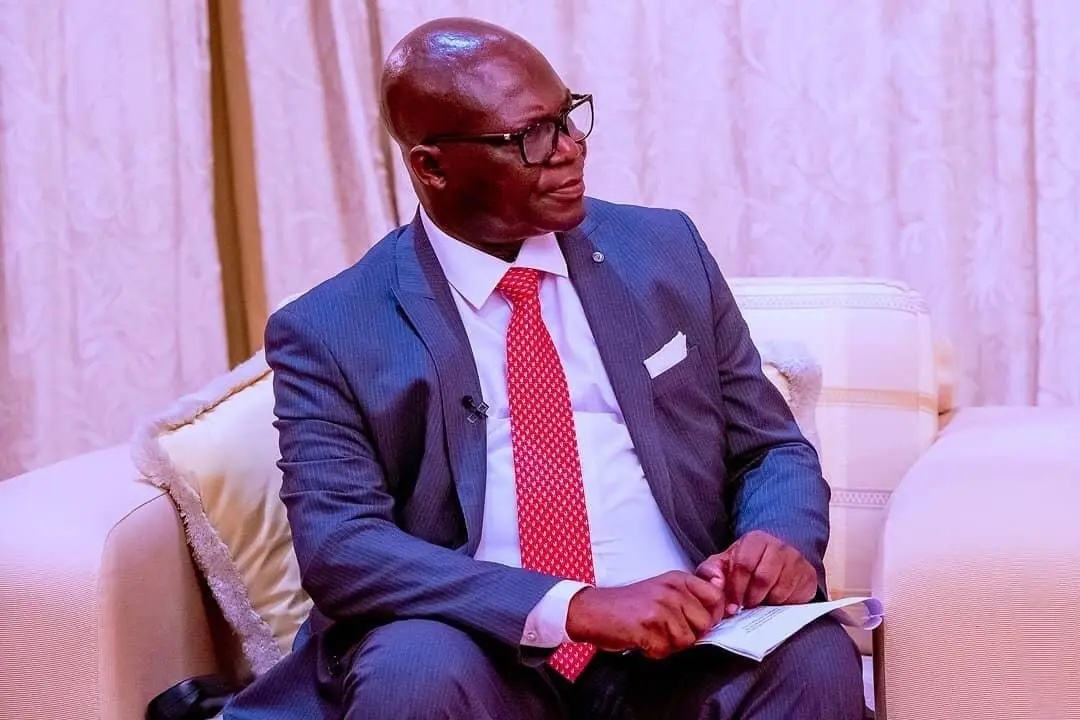
Former presidential spokesperson and broadcaster, Dr. Reuben Abati, has called on the Federal Government to urgently reform the country’s higher education sector and address deep-rooted governance and economic challenges as a way to curb the growing trend of brain drain, commonly referred to as the ‘japa’ syndrome.
Abati made the appeal while delivering the first convocation lecture of the University of Africa, Toru-Orua, located in Sagbama Local Government Area of Bayelsa State.
The event, held at the King Kpadia Memorial Civic Centre, featured a lecture titled “The Japa Syndrome and the Future of University Education in Nigeria: Thinking Outside the Box.”
Describing the mass emigration of Nigerian youth as a national emergency, the veteran journalist and academic attributed the trend to factors such as economic hardship, insecurity, corruption, lack of job opportunities, poor infrastructure, and weak governance—especially in the health and education sectors.
According to him, the ‘japa’ movement has led to the loss of some of the nation’s brightest minds, particularly from universities, thereby hampering national development and depleting the country’s intellectual and human resource capacity.
However, Dr. Abati noted that while the trend presents a serious challenge, it also offers potential benefits if Nigerians in the diaspora are engaged to contribute meaningfully to the nation’s progress.
He recommended collaborative reforms involving all education stakeholders to revamp Nigeria’s university system and address the root causes of migration.
Also speaking at the event, the Pro-Chancellor and Chairman of the Governing Council of the university, Mr. Kemela Okara, stressed the need for a strategic shift in Nigeria’s tertiary education system, emphasizing the importance of adequate funding to improve the quality and reach of higher institutions.
Meanwhile, the University of Africa, Toru-Orua, celebrated a major milestone with the graduation of 905 students during its maiden convocation ceremony.
The graduates span four academic sessions from 2020/2021 to 2023/2024, earning degrees across various fields of study.
Vice Chancellor of the institution, Professor Solomon Ebobrah, disclosed this during a press briefing, explaining that the university was established under the University of Africa Law of Bayelsa State in 2016.
He said the institution was designed to meet the educational needs of underserved communities by offering accessible and quality education.
Giving a breakdown of the graduating students, Prof. Ebobrah revealed that 66 graduates achieved First Class honours, 323 obtained Second Class Upper, 384 earned Second Class Lower, 123 finished with Third Class, and 9 were in the Pass category.
He also noted that the institution, which began with fewer than 500 students in the 2017/2018 academic year, now boasts a student population of around 4,000 drawn from 28 states across the country.
In addition, the university commenced its postgraduate programmes last year.