


For Nigerians living abroad, success comes with a hefty, often invisible surcharge. It’s called black tax, the unofficial, unspoken, and sometimes unbearable obligation to financially support family and friends back home.
While Nigeria celebrates rising remittance figures, with $20.98 billion in 2024 alone under Central Bank Governor Olayemi Cardoso, those numbers tell only part of the story.
Behind every dollar sent home is a diaspora worker juggling inflation, personal bills, mental health, and relentless expectations from relatives who believe “abroad” is synonymous with “ATM.”
According to the World Bank, Nigeria far outpaces neighbouring African countries in remittance inflows. Ghana received $2.43 billion in 2023, while South Africa’s figures fell below $900 million.
These comparisons highlight Nigeria’s unique reliance on its diaspora. Yet, while government officials like Cardoso celebrate policy reforms encouraging formal remittance channels, Nigerians abroad are quietly breaking under the weight of this financial lifeline.
Beneath the headline statistics lies an untold story: a culture of obligation morphing into entitlement.
Yetunde Arebi, in a social media post, says ‘‘entitlement and black tax go hand-in-hand’’.
‘‘People believe that once you leave the country, whether you are working or not, you automatically have more than they do.
They feel entitled to your income and expect you to provide for any need they have,” says Austria-based Ngozi Nwosu.
Dubai-based entrepreneur and influencer Abdul Quawiy Hammed sees black tax differently. “Black tax is why the African community stays stuck,” he says.
“Every dollar you make, instead of building assets, you’re covering someone else’s mistakes. Instead of investing, you’re rescuing. Black tax is not generosity; it’s generational punishment for being the first to figure it out.”
Hammed points to a deeper cultural issue: ‘‘The conflation of community support with entitlement. “When help becomes obligation, and obligation becomes expectation, and expectation turns into manipulation, that’s no longer culture. That’s a crisis. How do we build wealth when every step forward is met with someone pulling you backward?”
His blunt conclusion? “Yes, lift others as you climb. But not at the cost of your own ladder breaking.”
Texas-based Soji Adams shares stories that feel almost scripted in their predictability. “They’ll call with prayers, prophesy over your life, build trust, and then the story drops: rent is due, school fees unpaid, someone’s sick. You help once; they come back again. It becomes a cycle. They know how to manipulate emotions, playing the victim, invoking family duty, even leveraging religious guilt.
‘‘If you’re dealing with the bold ones, they’ll give you a week or two before coming back with another story. You might get mad and try to ignore them. But they won’t stop. And when they return, they’ll say all kinds of prayers for you again. It’s not that they mean it. I often tell my wife or friends: If Nigerians could channel the prayers they pray for people abroad toward themselves, they’d be more successful than us.’’
He recounts how generosity quickly turns into obligation. “When you stop helping, they accuse you of pride or wickedness. I had to learn; you cannot save everyone. You’re not El-Shaddai. Help within reason, not compulsion.”
While Dr Frank Odeyemi, a medical professional, feels he is obligated to support people in need, he is worried about the negative attitude with which some receive the support.
According to him: ‘‘I know others who, when they receive money, treat it as their right. The signs are all there, not gratitude, but expectation. It’s like they believe they’re owed that support.
‘‘The danger is, you start building monsters – not literally, but in the sense that people can become resentful or even hostile, not because you didn’t help, but because they think what you gave isn’t enough. That’s one of the key disadvantages of black tax’’, he observed.
Belfast-based Charity Kareem has found her coping mechanisms: “When I see messages from Nigeria, I don’t even open them sometimes. I read through the phone screen without unlocking it. If it’s about money, I skip it. If the spirit leads me to help, I do. Otherwise, I remind myself, I’m struggling too.”
Charity’s reality is far from the glamorous perception her social media might project. “People see photos and think you’re balling. They don’t know those pictures are just therapy. I post to remind myself I’m still alive, still relevant, even when I’m broke.”
The pressures of black tax aren’t just financial; they bleed into mental health, relationships, and long-term goals. Nigerians abroad are often caught between compassion and survival, generosity and exhaustion.
As Hammed puts it: “If we don’t start talking about this openly, about sustainability, financial literacy, and moving from dependence to dignity, we’ll keep mistaking silence for strength. That silence will bury our potential.”
Nigerians abroad are often seen as financial lifelines for their families back home. While this has created tensions, it stems largely from economic desperation, with the country inflation and employment rates at 22.22 percent. In many cases, the expectations have eroded trust between diasporans and their relatives.
Several cases of betrayal have gone viral. In 2023, a US-based Nigerian woman returned home to find an uncompleted building, despite having sent her brother substantial funds over decades to oversee the project. Her tearful outburst highlighted the heartbreak many faces.
Another woman living abroad for 8 years discovered her brother squandered the money she sent for a house. Upon returning, she found nothing built, and no trace of her brother.
Similar stories of disappointment abound in business investments that failed because partners or workers back home chose to act dishonestly.
These betrayals have left many abroad hesitant to invest in Nigeria again.
“People are being financially abused by relatives back home,” says an Australia-based Nigerian lady who would not like her name to be mentioned.
“It’s not immature to protect your mental health. Saying no isn’t wickedness. It’s survival.”
She emphasized boundaries: “Have honest conversations. Set clear limits. Don’t make promises you can’t fulfil just to avoid guilt. Empower your family members to fend for themselves. You can’t afford to be the only tree in the garden.”
Thompson John, a Qatar-based tech expert, noted that the pressure of black tax has ripple effects beyond finances.
“It delays personal financial goals like saving, investing, or buying a home. It can cause stress, burnout, and even lead to debt, because people don’t care whether you’re working or whether you’re struggling to pay your own bills. All they think is you live abroad, so you should meet their demands.”
Drawing from her own experiences, John highlighted how expectations are not limited to family alone.
“Even long-time friends play this game. First week, they greet you. Second week, they check in. Third week, they present a bill. I eventually stopped posting pictures online because as soon as people see you looking happy, they assume you’re doing well. When you say no, they’re disappointed or angry. Some family members even expect monthly allowances without asking, just because they assume you have more.”
“There are Nigerians here in Qatar who can’t even afford food or rent. I’ve personally helped some of them. Yet, their families back home keep pressuring them. People need to understand that living abroad doesn’t mean having everything figured out. That pressure makes it hard to achieve your own goals.”
The mental health impact because of excessive demand for black tax was underscored by Nkechi Uwandu.
According to her: ‘‘I think a lot of people who are quick to judge simply can’t relate. Some people are being financially abused by their parents, relatives, and people back home. Some are being treated like slaves.
‘‘Others have ended up in psychiatric wards because they don’t know how to escape debts they didn’t even create, debts caused by parents who want to impress their neighbours or who feel entitled, thinking, ‘Because I raised you, you owe me your life.
‘‘It’s not immaturity when your mental health is suffering. You have a right and a responsibility to take care of your mental health.’’
Bukky Gbenro, a cleric and social commentator, puts it plainly: “Life is beautiful when you’re a blessing. It’s boring when you live for yourself alone. But we live in a time when the economy of nations, families, and individuals is under serious strain. Some people have mastered the art of emotional blackmail, raking in money from friends, family, church members, and neighbours until they’re richer than those who send it.”
Gbenro warned of the emotional toll. “If you don’t guard yourself with discretion, people will take advantage until you’re drained. Budget for charity, yes. But learn to say no—politely, firmly, and without guilt.”
Kareem found a solution in structured giving, despite the burden of requests she frequently has to deal with: “Every December, I give to widows and children in my church back home. That’s my contribution. Outside of that, if I say no, my immediate family understands. That’s how I manage the constant demands.”
As for John: “I fixed a monthly allowance for my parents and in-laws – that’s clear and consistent. But others? They pop up out of nowhere with their bills, not knowing what we’re facing here.”
Estonia-based Yemisi Byron is apologetic about her disapproval of black tax and asked those who want to build wealth to desist from paying it: ‘‘You have to be strict with your money. Stop paying for black tax. You cannot build wealth that way. You need to build a system that supports wealth creation’’.
In her intervention, famous entrepreneur, Ibukun Awosika, noted that black tax is a version of Nigeria’s social security.
She, however, advised young people who are trying to build wealth that: ‘‘You know, in Nigeria we don’t have a social security number; our social security is family. There is nothing wrong with it. What I have found is that it makes it difficult to build or retain wealth because we are continuously being drained.
‘‘What you need to do is to determine from your income a percentage based on your own family situation, 10 or 5 percent. Be realistic with this percentage; don’t try to be a hero. Do a family meeting and tell them that from what I earn and the expenses I have to make, this is what I can afford to give.
“From what I am earning, I can only afford this much to give. Don’t ask me for more than I can afford,’’ Awosika counselled.
Additionally, to deal with the emotional guilt, Dr. Seun Ogundoyin, a UK-based clinical psychologist, advocates for the need for diasporans to practice assertiveness, self-control, and prudence to play their roles well without being detrimental to people’s mental well-being.

‘‘The most critical factor is assertiveness, which is the ability to say no when you need to say no. You don’t have to satisfy others at your own detriment”, Dr Ogundoyin said.
He also talks about the importance of prudent budgeting and self-control.
“Don’t let people think you’re rich. Giving must be Spirit-led. Don’t let people think you’re rich or obligated. Set boundaries. Give intentionally, not emotionally. The danger of unchecked giving is you create entitlement, even hostility. Giving shouldn’t be seen as a tax, but an obligation guided by God,” advised Kareem.
London-based communication expert, Dr. Rasaq Adebajo, also offering counsel on how Nigerians abroad manage their obligations, said: “You cut spending. Eat simple meals, wear regular clothes. If you splurge, you fall into debt. Sometimes you just say no. People ask for new phones, cars, even business capital they won’t follow through on. Some you help, others you block. Protecting mental health is key. I help when I can—but I’ve learned to draw the line.
‘‘You learn to say no. Sometimes, people ask for non-essential things like new phones. Then some others return asking for more once they’ve been helped once. I’ve had to block people after helping them.
“You can’t keep giving when you’re barely surviving. I’ve learned to draw the line. I help where I can. When I can’t, I say so. I protect my mental health. I avoid stress and unnecessary pressure,’’ Adebajo said.
On the flipside, Dr. Ademola Adesola, a Canada-based scholar, provided a more nuanced reflection.
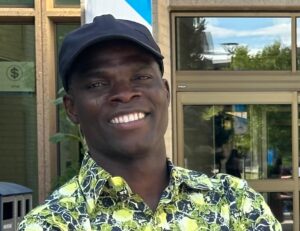
According to him, “I believe black tax, in many cases, is necessary. Many of the recipients truly have needs. Also, for many of us raised in a communal culture, this sense of duty runs deep. No self-respecting adult would ask for help without a compelling reason.
“Often, it’s not because my address says ‘Canada’ but because life has dealt them a bad hand, especially under the dysfunction of governments back home”, Dr Adesola said.
However, he acknowledged the adverse side. “There are also those who see diaspora earnings as endless slush funds. Those people shouldn’t be entertained. They think living abroad equals abundance. But we’re right to ignore their blackmail or entitlement. Still, for many, black tax remains a lifeline, not just for families but for keeping the economy back home afloat.”
Dr. Adebajo outlined the practical implications thus: “Sending money home is unavoidable, friends, family, community. Inflation is high, incomes are low. Every time people see you online, they reach out. Some avoid WhatsApp, but how long can you stay offline? It’s part of our culture to give back.”
But he highlighted the consequences: “Diaspora remittances are high, but our finances suffer. Bills here must be paid on time, or your immigration status is affected. Simple things—council tax, utilities—demand consistency. Falling behind can ruin your credit score. For many Black and minority workers in low-income jobs, after paying rent and sending remittances, what’s left? Overdrafts, credit cards. Guilt follows if you can’t help, but back home they don’t understand the struggle.”
Dr. Festus Adedoyin, a senior lecturer at Bournemouth University, challenged the very terminology of “black tax.”

“I struggle with this concept. Why ‘black’? Why ‘tax’? It’s a colonial mindset creeping into our culture. Helping family isn’t unique to Africans. My Welsh friend’s grandmother left her money; no one calls that ‘white tax.’ In our culture, we are communal. We look out for each other, financially or otherwise.”
He argued passionately that remittances are cultural, not a burden: “We’ve always shared resources before colonization, after colonization. This concept of black tax is foreign to our values. It’s how we build communities. Helping each other is not a liability—it’s tradition.”
Warning against adopting Western individualism, he said: “We forget that our parents built futures through communal effort. The first person from a village to succeed was expected to help others. We should carry that same principle. It’s not black tax. It’s culture. Lack, not abundance, is what makes people see it as a burden.”
Dr. Adedoyin’s perspective is also echoed by Yemisi Haastrup, a UK-based information specialist, who believes that there is nothing wrong with supporting those in the homeland, adding that: ‘‘It is important. It’s necessary. We can’t avoid it; it’s part of our culture as Africans. We are interconnected, and we depend on one another. We cherish that communal lifestyle. My brother’s problem is our problem. My uncle’s concern is mine. I don’t see it as a bad thing; I know it’s something we are called to do. I understand that some people say we should just close our eyes and ignore it, but I can’t.

“For me, I do my budgeting every month. I know the basic things I must take care of, and I also make an allowance for giving – what some call black tax, because I know every income I receive is not for me alone. I believe God places us in certain positions so we can help others.
“However, if any request for help exceeds what I’ve budgeted, I simply can’t accommodate it. That said, what I give to my parents or my in-laws, I don’t consider black tax—I make a separate allowance for that out of love and responsibility.’’
South Korea-based Olatunji Bankole opined that the blame for the increasing dependence on Nigerians abroad should be placed on the government.
In his words: ‘‘The issue of black tax would not arise if leaders in Nigeria did their part in addressing large-scale unemployment and poor economic realities, which have led to the surge in black tax. As much as it is not in the culture of Africans to excessively seek financial favours from their peers or relatives, the current economic realities do not permit otherwise’’.
In interviews with Nigerians at home, many admitted to depending on relatives abroad simply to survive.
Ronke Ajibola, a 42-year-old mother of three, explained: “It’s not easy here. Sometimes you wake up not knowing how to feed your family. If you have someone abroad, that’s your only hope.”
She acknowledged some have abused the system to the detriment of those genuinely needing the intervention of friends and family in diaspora.
“Yes, some lie or exaggerate illnesses, school fees, or rent. But it’s about survival. Dignity becomes a luxury when you’re poor’’, Ajibola noted.
Her solution pointed beyond individuals to systemic problems: “The real issue is the lack of opportunity. If people had jobs and income, they wouldn’t pester their relatives abroad every week. The government must do more to empower people here.”
For Akanni Samuel, black tax has been a blessing, although he was upfront about his disdain for entitlement mentality.
According to him: “I am a beneficiary of support from relatives living abroad, and I am very grateful for those supports because they came at critical instances – the supports I received when I needed to write my WAEC and JAMB exams are instances I will not forget in a hurry and I am grateful to those relatives who made sacrifices for me despite having their own commitments.”