

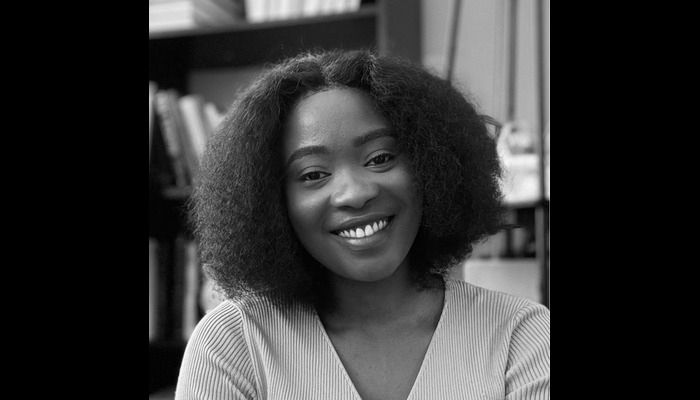
Long before a tumour shows up on a medical scan or symptoms force a patient into hospital, subtle biological signals often signal that something is wrong. These signals are so faint that conventional medical tools frequently miss them. This is the invisible frontier Temitope Adeniyi is working to unlock.
The Nigerian-born quantum scientist, now based in the United States, recently emerged as the only Nigerian named among UNESCO’s 100 global honourees for the International Year of Quantum Science and Technology.
She was recognised for her pioneering work on quantum sensors aimed at detecting deadly diseases at their earliest and most treatable stages.
Speaking at a Python programming conference in Ohio, Adeniyi explained that many neurological conditions and cancers produce signal changes long before symptoms appear.
“Some of these signals are too small to be detected until the disease is already advanced. My goal is to build quantum sensors that can pick up even the tiniest changes,” she said.
If successful, her research could transform how illnesses such as cancer are diagnosed, influence future hospital diagnostic tools and open doors for African participation in the rapidly expanding quantum technology industry.
Beyond medicine, it also places Nigeria and Africa within a high-tech scientific space expected to shape the coming decades.
At the heart of her work is quantum technology. Unlike classical computers that operate with bits fixed as 0 or 1, quantum computers use qubits, which can exist in multiple states simultaneously. This gives quantum systems the ability to solve complex problems at speeds far beyond today’s most powerful machines.
Adeniyi’s growing profile has earned her several global recognitions. In January 2024, she received the FemtoLeap Award for rising quantum stars at the Quantum Innovation Summit in Dubai.
She was also selected for the Female Science Talents programme of the Falling Walls Foundation in Germany, which picked just 20 scientists worldwide from over 600 applicants.
She currently works as a research assistant at Cleveland State University, where she helped design the institution’s first quantum computing course, now part of its curriculum.
She has also co-developed and taught quantum machine learning courses, while introducing quantum computing and artificial intelligence concepts to high school students across the region.
Born in Lagos and raised in Ibadan, Adeniyi hails from Ijebu-Ijesa in Osun State. She grew up in a home where education was central to daily life, with a lecturer father and a mother who ran a primary school. Teaching younger pupils during school holidays was routine. “My parents made learning a lifestyle,” she recalls.
Ironically, science was not her childhood dream. She loved drawing and imagined a future in the arts. But her strength in mathematics pushed her into science classes after junior secondary school.
A long university strike later proved decisive, as her elder brother, an engineering student, taught her science through stories and songs. “That was when I fell in love with physics,” she said.
She completed secondary school at 14 and went on to study Physics with Electronics at Osun State University. Despite warnings about limited career prospects, she pursued the course with conviction. During her postgraduate studies at the Federal University of Technology, Akure, she discovered programming, artificial intelligence and machine learning, eventually finding her niche in quantum computing.
Her passion for the field led her to self-study through online courses, hackathons and summer schools. A chance LinkedIn connection with a US-based academic eventually opened the door to her relocation to the United States in January 2023.
At Cleveland State University, she enrolled for a PhD in Computer Science and began advanced research in quantum computing. She admits battling self-doubt initially. “Being African and female made me question myself at first,” she said. That faded as her depth of preparation became evident.
Her research now spans quantum algorithms, quantum machine learning, sensor development and the application of AI to healthcare and population health informatics, in collaboration with medical institutions.
Beyond personal success, Adeniyi is focused on building Africa’s quantum future. In 2024, she helped revive the African Quantum Consortium, which was officially relaunched in January 2025, and now serves as its programme lead.
The consortium connects researchers, students and policymakers across the continent and already has representation from 23 countries.
Through fellowships, hackathons and partnerships with global tech firms such as IBM, the initiative aims to ensure Africa is not sidelined in the quantum revolution. “We want Africa to be a contributor, not just a consumer of quantum technology,” she said.
While unsure when she will return permanently to Nigeria, Adeniyi says her long-term plan is clear. She hopes to establish a world-class deep-tech research institute in the country, equipped with quantum computers, robotics and space technology. “Accolades are not the end goal. Giving back is,” she said.
From a child who dreamed of art to a UNESCO-honoured quantum scientist, Temitope Adeniyi represents a new generation of Nigerians in the diaspora, globally respected, firmly rooted at home and determined to shape the technologies of the future.