

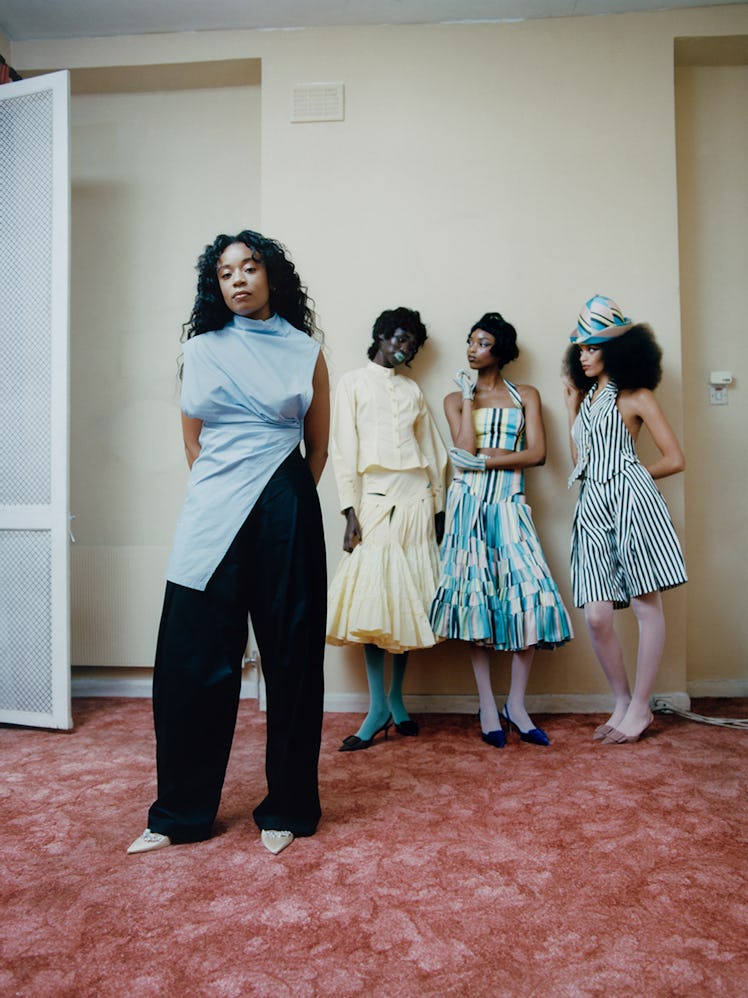
At a fashion week known for spectacle, British-Nigerian designer Tolu Coker chose intimacy.
Instead of unveiling her Spring/Summer 2026 collection on the runway at London Fashion Week, the 32-year-old presented a short film titled Unfinished Business, co-directed with her brother, Ade Coker.
The film features supermodel Naomi Campbell alongside a new generation of Black models in a bedroom filled with wooden toys and family photographs. The soundtrack captures a private conversation between Campbell and the Coker siblings on childhood and motherhood.
“The story we wanted to tell wasn’t a story of spectacle,” Coker said. “It was about the intimacy of mundane moments, like a family video.”
Pieces from her eponymous label including a butter-yellow fitted bodice paired with a voluminous 1950s-inspired skirt were worn by both Campbell and younger models, symbolising garments as heirlooms passed down through generations.
Heritage Woven Into Design
Coker’s creative lens is rooted in dual identity North Kensington in West London, where she was raised, and Lagos, the birthplace of both her parents.
Her late father, Kayode, was a photographer and community organiser who documented protests and political shifts in their neighbourhood, rarely stepping out without his trademark beret. Her mother, Olapeju, a devoted Christian and active member of the school parent-teacher association, sewed much of the family’s wardrobe, from daily wear to church outfits.
Family life was steeped in West London’s swap culture, with frequent exchanges at Portobello Road Market and early morning car-boot sales experiences that shaped Coker’s understanding of clothing as both personal and communal.
Tragedy also left an imprint on her relationship with fashion. At nine, she lost her 12-year-old sister; four years later, her father passed away.
“When they no longer have a physical body, what you have of a person is their belongings,” she reflected. “Their clothes ended up having an intangible value for me.”
From Central Saint Martins to Global Recognition
Coker studied fashion design and textile print at Central Saint Martins, completing internships at Céline during the Phoebe Philo era, JW Anderson and Maison Margiela. After graduating in 2017, she worked briefly at a fast-fashion retailer in Spain but found the experience creatively and ethically limiting.
Determined to build her own label, she launched her brand in 2021. Within a year, she was selected for artist Theaster Gates’s Design Lab residency in Chicago, an interdisciplinary programme that expanded her artistic scope.
Her designs have since been worn by Doechii, Rihanna and Ariana Grande. She was also named a finalist for the LVMH Prize last year.
At the British Fashion Awards, Coker received a Vanguard Award nomination and designed a forest-green houndstooth tailored skirt suit for rapper Little Simz, who won the Cultural Innovator Award. The colour choice subtly paid tribute to their shared Nigerian heritage.
Craft, Community and Continuity
Despite her growing international acclaim, Coker has deliberately kept production local. All garments are manufactured in the United Kingdom, and she maintains close working relationships with her seamstresses often knowing exactly who crafted each piece.
“Each piece has my name on it, but it’s not about me,” she said. “Most things I make will outlive their original wearer. Kind of morbid, but also quite a beautiful thought.”
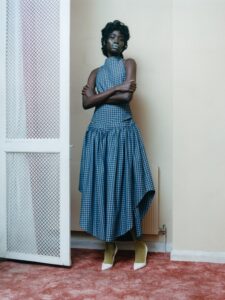
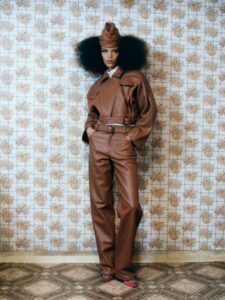
From sculptural headwear including reinterpretations of traditional African filas to sharply tailored silhouettes that revisit classic British codes, Coker’s work bridges continents and generations.
In redefining traditional British style, the British-Nigerian designer is proving that fashion need not shout to be heard sometimes, legacy speaks loudest in a whisper.