

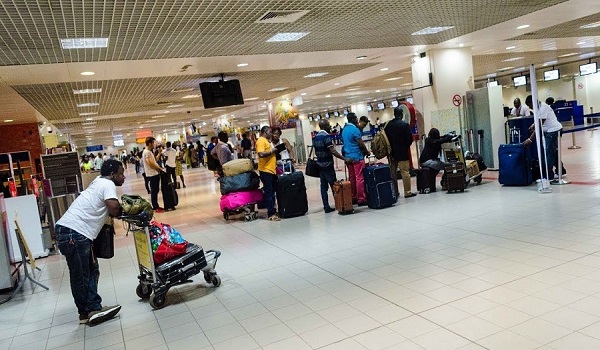
Canada expelled 366 Nigerians between January and October 2025 as immigration enforcement gathered pace at its highest level in more than a decade, official records have shown.
Figures from the Canada Border Services Agency indicated that another 974 Nigerians are currently listed under removal in progress, meaning they are awaiting deportation from the country.
Data updated on November 25, 2025 placed Nigeria ninth among the top 10 countries whose nationals were removed during the period, while it ranked fifth among those with the highest number of people awaiting removal.
A review of past records showed fluctuating deportation figures for Nigerians over the years. Canada removed 339 Nigerians in 2019, 302 in 2020, 242 in 2021 and 199 in 2022, before the number rose sharply to 366 within the first 10 months of 2025.
The renewed spike followed an aggressive immigration clampdown by Canadian authorities, with the border agency now deporting nearly 400 foreign nationals every week.
In the 2024–2025 fiscal year alone, 18,048 people were removed at a cost of about 78 million dollars.
Under Canada’s Immigration and Refugee Protection Act, the agency is required to enforce removal orders against foreign nationals found inadmissible on grounds ranging from security concerns and criminality to misrepresentation and violation of immigration rules.
About 83 per cent of those removed are failed asylum seekers, while criminal offences account for roughly four per cent.
Canadian law recognises three categories of removal orders, including departure orders, exclusion orders and deportation orders, each with varying conditions for re entry.
Authorities said deportations are being stepped up to meet tighter immigration targets and address housing, labour and border security pressures.
Concerns have, however, been raised by refugee lawyers over possible legislative changes. President of the Canadian Association of Refugee Lawyers, Aisling Bondy, warned that proposed reforms under Bill C 12 could permanently bar many people from filing refugee claims.
An analysis of the 2025 data showed Nigeria as the only African country among the top 10 nationalities deported, alongside Mexico, India, Haiti, Colombia, Romania, the United States, Venezuela, China and Pakistan.
Despite the removals, Canada remains a key destination for Nigerians.
Census figures show that over 40,000 Nigerians migrated to Canada between 2016 and 2021, while more than 71,000 acquired Canadian citizenship between 2005 and 2024, reflecting sustained migration driven by labour shortages and an ageing population.
366 Nigerians, 974 face removal
Canada deports 366 Nigerians, 974 face removal
Canada expelled 366 Nigerians between January and October 2025 as immigration enforcement gathered pace at its highest level in more than a decade, official records have shown.
Figures from the Canada Border Services Agency indicated that another 974 Nigerians are currently listed under removal in progress, meaning they are awaiting deportation from the country.
Data updated on November 25, 2025 placed Nigeria ninth among the top 10 countries whose nationals were removed during the period, while it ranked fifth among those with the highest number of people awaiting removal.
A review of past records showed fluctuating deportation figures for Nigerians over the years. Canada removed 339 Nigerians in 2019, 302 in 2020, 242 in 2021 and 199 in 2022, before the number rose sharply to 366 within the first 10 months of 2025.
The renewed spike followed an aggressive immigration clampdown by Canadian authorities, with the border agency now deporting nearly 400 foreign nationals every week.
In the 2024–2025 fiscal year alone, 18,048 people were removed at a cost of about 78 million dollars.
Under Canada’s Immigration and Refugee Protection Act, the agency is required to enforce removal orders against foreign nationals found inadmissible on grounds ranging from security concerns and criminality to misrepresentation and violation of immigration rules.
About 83 per cent of those removed are failed asylum seekers, while criminal offences account for roughly four per cent.
Canadian law recognises three categories of removal orders, including departure orders, exclusion orders and deportation orders, each with varying conditions for re entry.
Authorities said deportations are being stepped up to meet tighter immigration targets and address housing, labour and border security pressures.
Concerns have, however, been raised by refugee lawyers over possible legislative changes. President of the Canadian Association of Refugee Lawyers, Aisling Bondy, warned that proposed reforms under Bill C 12 could permanently bar many people from filing refugee claims.
An analysis of the 2025 data showed Nigeria as the only African country among the top 10 nationalities deported, alongside Mexico, India, Haiti, Colombia, Romania, the United States, Venezuela, China and Pakistan.
Despite the removals, Canada remains a key destination for Nigerians.
Census figures show that over 40,000 Nigerians migrated to Canada between 2016 and 2021, while more than 71,000 acquired Canadian citizenship between 2005 and 2024, reflecting sustained migration driven by labour shortages and an ageing population.
Canada deports 366 Nigerians, 974 face removal
Canada expelled 366 Nigerians between January and October 2025 as immigration enforcement gathered pace at its highest level in more than a decade, official records have shown.
Figures from the Canada Border Services Agency indicated that another 974 Nigerians are currently listed under removal in progress, meaning they are awaiting deportation from the country.
Data updated on November 25, 2025 placed Nigeria ninth among the top 10 countries whose nationals were removed during the period, while it ranked fifth among those with the highest number of people awaiting removal.
A review of past records showed fluctuating deportation figures for Nigerians over the years. Canada removed 339 Nigerians in 2019, 302 in 2020, 242 in 2021 and 199 in 2022, before the number rose sharply to 366 within the first 10 months of 2025.
The renewed spike followed an aggressive immigration clampdown by Canadian authorities, with the border agency now deporting nearly 400 foreign nationals every week.
In the 2024–2025 fiscal year alone, 18,048 people were removed at a cost of about 78 million dollars.
Under Canada’s Immigration and Refugee Protection Act, the agency is required to enforce removal orders against foreign nationals found inadmissible on grounds ranging from security concerns and criminality to misrepresentation and violation of immigration rules.
About 83 per cent of those removed are failed asylum seekers, while criminal offences account for roughly four per cent.
Canadian law recognises three categories of removal orders, including departure orders, exclusion orders and deportation orders, each with varying conditions for re entry.
Authorities said deportations are being stepped up to meet tighter immigration targets and address housing, labour and border security pressures.
Concerns have, however, been raised by refugee lawyers over possible legislative changes. President of the Canadian Association of Refugee Lawyers, Aisling Bondy, warned that proposed reforms under Bill C 12 could permanently bar many people from filing refugee claims.
An analysis of the 2025 data showed Nigeria as the only African country among the top 10 nationalities deported, alongside Mexico, India, Haiti, Colombia, Romania, the United States, Venezuela, China and Pakistan.
Despite the removals, Canada remains a key destination for Nigerians.
Census figures show that over 40,000 Nigerians migrated to Canada between 2016 and 2021, while more than 71,000 acquired Canadian citizenship between 2005 and 2024, reflecting sustained migration driven by labour shortages and an ageing population.