
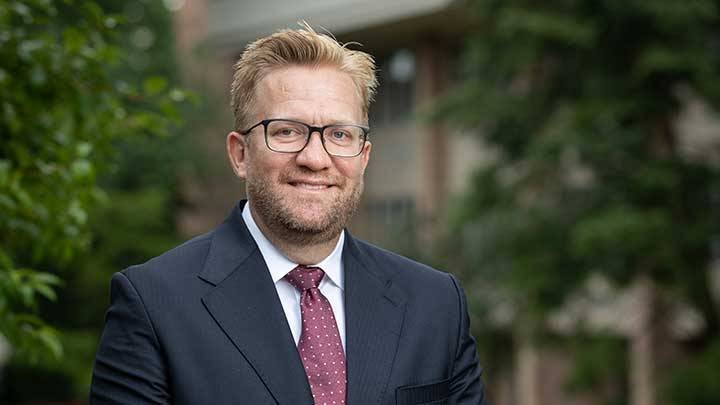
Nigerian-born Dutch entrepreneur, Dr. Wiebe Boer, has criticised United Kingdom opposition leader, Kemi Badenoch, for publicly distancing herself from Nigeria, describing the stance as “deeply problematic.”
Boer, who was born and raised in Nigeria but holds Dutch citizenship, expressed his concerns in a LinkedIn post on Friday, insisting that Nigeria remains an integral part of his identity, regardless of where he lives or works.
His comments follow Badenoch’s recent remarks on the Rosebud podcast with Gyles Brandreth, where she revealed that she no longer identified as Nigerian, despite her ancestry and upbringing.
She also disclosed that she had not renewed her Nigerian passport in more than two decades.
“I’m Nigerian through ancestry, by birth, despite not being born there because of my parents, but by identity I’m not really.
“I know the country very well, I have a lot of family there, and I’m very interested in what happens there,” Badenoch said.
Reacting to this, Boer stated, “As a proud Nigerian-born and raised Dutchman, I claim Nigeria anywhere and everywhere. From boardrooms in Amsterdam to classrooms in Michigan and hospitals in Guyana, Nigeria is always in my story — not just as heritage, but as part of the engine that drives who I am.
“So, I found it deeply problematic to hear that UK opposition leader, Kemi Badenoch — born in the UK to Nigerian parents — has chosen to disassociate from Nigeria, saying she no longer identifies as Nigerian.”
The entrepreneur compared Badenoch’s comments to the examples of leaders like former US President Barack Obama and UK Prime Minister Rishi Sunak, saying they have never renounced their ancestral heritage, even when their political careers are rooted elsewhere.
“Why? Because I’ve never heard Obama disavow Kenya or Indonesia — even while running for president of the United States. I’ve never heard Sunak disassociate from his Indian or East African roots.
“In fact, it seems that identifying with Nigeria has never been more on trend in the UK — not for optics, but because the impact of Nigerians across British life is too real to ignore.”
Boer went on to cite the achievements of prominent Nigerians in the UK across sports, entertainment, literature, politics, and business, listing football stars, actors, musicians, Olympic champions, and business leaders.
“Think about it: In sports: Maro Itoje, captain of England Rugby and The British & Irish Lions; Bukayo Saka, Noni Madueke, Eberechi Eze, and Ethan Nwaneri — all proudly of Nigerian descent, lighting up English football.
“In film: Academy Award-nominated actors like Chiwetel Ejiofor, Cynthia Erivo, David Oyelowo, Sophie Okonedo — all household names. Or Academy Award winner Colin Firth, who grew up in Yola, Nigeria. In music: From Seal and Sade to today’s breakout star Dave — Nigerian heritage runs deep.
“In boxing: Anthony Joshua and rising star Moses Itauma — both of Nigerian origin.
“In religion and politics: Former Archbishop of Canterbury, Justin Welby, once worked in Nigeria’s oil industry in Port Harcourt; same with former UK Prime Minister John Major, who had a banking stint in Jos early in his career.
“In athletics: Olympic legends like Daley Thompson and Christine Ohuruogu.
“In literature: Booker Prize-winner Ben Okri. In business: Visionaries like Tom Ilube, CBE, and Obi Nwosu.”
Boer also highlighted Nigerian-led companies with a strong presence in the UK, noting their contributions to the economy.
“And let’s not forget the hard economic facts. Companies with Nigerian roots — Helios Investment Partners, IHS Towers, Hellenic Bottling (Coca-Cola HBC), Seplat Energy Plc and #GTBank — are either listed on the London Stock Exchange or have major headquarters in the UK. These firms aren’t just flying the flag — they’re contributing real jobs, capital, and innovation to the British economy,” he added.
He stressed that it was possible to hold a country accountable without disowning it.
“The point? Nigeria continues to shape global excellence — and the UK is a major beneficiary of that.
“Choosing to distance oneself from Nigeria isn’t neutral. It says something. And for those of us who know the complexity, beauty, pain, and power of our homeland — it stings.
“You can critique a country without renouncing it. That’s what leaders do. That’s what representation demands.
“I’ll always claim Nigeria. Every day, everywhere. Because it’s still shaping some of the best stories — and people — the UK (and the world) has to offer,” he concluded.