

Indian authorities removed no fewer than 1,470 Nigerian nationals from the country between April 2023 and March 2024, making Nigeria the most deported nationality during the period.
Data obtained from India’s Ministry of Home Affairs revealed that Nigerians accounted for 63 per cent of the 2,331 foreign nationals deported from the South Asian nation within the fiscal year under review.
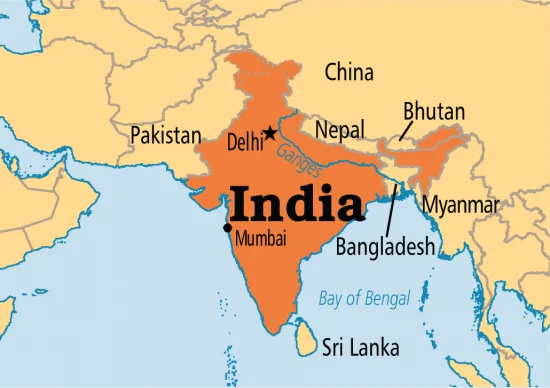
The deportations, carried out through Foreigners Regional Registration Offices in seven major cities including Mumbai, New Delhi, Chennai, Kolkata, Amritsar, Bangalore and Hyderabad, averaged 122.5 removals monthly or approximately four expulsions daily.
Bangladesh emerged second with 411 deportations representing 17.6 per cent of the total, whilst Uganda recorded 78 cases or 3.3 per cent, making it the only other sub-Saharan African nation among the top three.
The Indian government attributed the majority of deportations to expired visas and drug-related offences, with many affected Nigerians having initially entered the country on student visas that subsequently lapsed.
In December 2025, authorities expelled 32 Nigerians following a coordinated anti-narcotics operation conducted by the EAGLE unit across multiple states in Delhi.
Officials described the exercise as targeting an international drug trafficking network.
Earlier in November 2025, Hyderabad police deported Onyeukwu Victor, who had entered India in 2021 on a student visa but remained illegally after its expiration in 2024.
The Narcotics Enforcement Wing accused him of coordinating drug distribution to customers in Hyderabad and Bengaluru, though no substances were recovered during his arrest.
Another Nigerian, Victor Obasi, was removed from Hyderabad in January 2026 for unlawful residence and suspected connections to drug trafficking. Authorities described his continued presence as posing potential risks to public safety and national security.
The coastal state of Goa has been particularly assertive in enforcement actions. Chief Minister Pramod Sawant disclosed in October 2022 that approximately 650 Nigerians were deported from the tourist destination between 2019 and 2022 as part of campaigns against drug trafficking and visa violations.
“Earlier 700 Nigerians were staying illegally, now only 50 are remaining. We could deport them,” Sawant stated, noting that the federal Home Ministry had directed other states to establish similar detention facilities for foreign nationals.
The deportation figures emerge despite warming diplomatic relations between both nations. President Bola Tinubu attended the G20 Summit in New Delhi as a guest in September 2023, where he held talks with Prime Minister Narendra Modi on bilateral cooperation spanning defence, agriculture, trade and investment.
Prime Minister Modi reciprocated with a visit to Nigeria in November 2024, his first in 17 years and the first by an Indian premier since 2007.
During the two-day engagement, Modi received the Grand Commander of the Order of Niger, becoming only the second foreign dignitary after Queen Elizabeth II to be so honoured.
The leaders signed three memoranda of understanding covering cultural exchange, customs cooperation and survey collaboration, whilst exploring avenues to deepen the India-Nigeria Strategic Partnership established in 2007.
Indian enterprises have invested a cumulative $27 billion in Nigeria, with 200 companies maintaining operations in the country.
Bilateral trade between both nations stood at $7.89 billion in 2023-2024, declining from $11.8 billion the previous year, primarily due to reduced crude oil purchases from Nigeria.
Approximately 60,000 Nigerians currently reside and work in India, constituting the largest West African community in the country.
India recorded 9.84 million foreign visitors during the April 2023 to March 2024 period, with Bangladesh leading at 2.1 million arrivals, followed by the United States with 1.7 million and the United Kingdom at 900,000.
Charles Onunaiju, Research Director at the Centre for China Studies in Abuja, attributed the trend to diminishing domestic opportunities driving young Nigerians abroad.
“We have a challenge. Since Nigeria is becoming inhospitable, especially for young people with no opportunities, there is desperation to go abroad,” Onunaiju observed.
The Nigerians in Diaspora Commission confirmed its readiness to receive deported citizens from any country. Abdur-Rahman Balogun, the commission’s Director of Media and Corporate Affairs, stated that the federal government has established an inter-agency committee comprising the Ministry of Foreign Affairs, NiDCOM, Ministry of Humanitarian Affairs and the Office of the National Security Adviser to manage mass deportations.
During the same period, India granted 1,112 long-term visas to minority communities from Pakistan and issued 1,699 citizenship certificates through federal and state channels.