
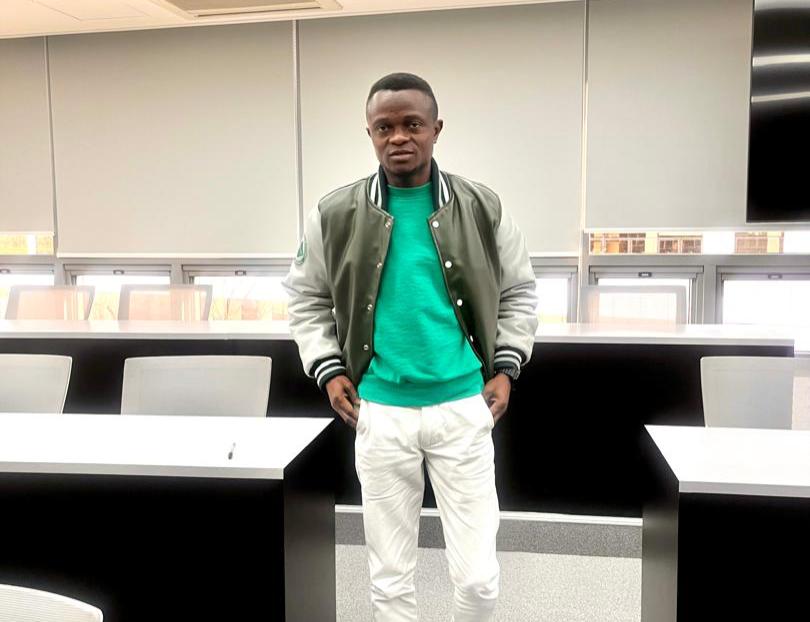
In this enlightening interview, Bankole Abdulhameed Olatunji, a Nigerian scholar at the KDI School of Public Policy and Management in South Korea, shares his journey of adaptation, insight, and reflection. Drawing from his background in Nigeria’s public and private sectors, he offers a rare comparative view of life in one of Asia’s most developed nations. Excerpts:
Let’s start with your journey; what brought you to South Korea, and what was your initial impression upon arrival?
My name is Bankole Abdulhameed Olatunji, and I’m currently studying on scholarship at the KDI School of Public Policy and Management. I am undertaking a master’s in public management, focusing on understanding the functioning of public service and insights that are relevant to the private sector and multinational organizations.
I am from Ota, Ogun State, Nigeria. I have had extensive experience working in both the public and private sectors. I attended the prestigious Obafemi Awolowo University, where I studied Sociology and Anthropology for my bachelor’s degree, graduating in 2013 with a second-class upper division.
Later, I had my postgraduate studies in Sociology at the University of Lagos.
I am pursuing a master’s in public management at the Korean Development Institute.
The course and its syllabi are so robust that they expose me to a wide range of subjects such as policy process analysis, strategic management, political economy of development, politics of the global economy, and development in the Middle East and Africa, among others.
The faculty members are excellent. Most of them trained in the USA and are renowned in their respective fields.
I got to South Korea in February 2025, and it’s been an amazing experience since then.
As an African, and with the media framing, I had the impression that South Korea was a conservative society with strict rules and nuances that were antithetical to Western ideals. Unfortunately, I have found that to be wrong.
South Korea is a society that holds liberal ideals in common with Western society. Its good neighbours, such as Japan, Singapore, and China, allow it to create a perfect blend of modernity and traditional ways of life. The people are courteous, warm, hospitable, and very intelligent. They rank high on the metrics of countries with the smartest people in the world.
What are some of the biggest challenges you’ve faced as a Nigerian living in South Korea, particularly in navigating work, social life, or public perception?
I have not faced a lot of challenges personally, and this is because I am sociable, down-to-earth, and relate with people across the board. However, language seems to be a striking one. Since English is not the country’s lingua franca, getting along in informal settings such as markets, parks, and so on can be challenging. Besides that, all is good.
The food is not African, which is not a challenge for me as most of it is delicious. Moreover, I cook my meals, and eating out is almost non-existent.
Also, there is a rich cultural dynamic among Africans in the school, and missing home and the food is not really felt per se. Navigating social life has been pretty easy as I go along with the shade of African brotherhood. In some cases, I also integrate with people from other racial backgrounds. This could come in forms of dinners, playing soccer, praying in the school mosque, and watching movies.
The public perception of South Koreans from outside the country might be that they are conservative or even racist to some degree. However, that is not true. They are willing to help at any time, honest and true to their word.
How would you describe the Nigerian or broader African community in South Korea?
The Nigerian community in Korea is doing a great job of bringing everyone together and serving as purveyors of intellectual and practical insights to advance the betterment of the continent. Although largely composed of students, there is little it can do.
However, the African community is building strongly. Young undergraduate students are trooping into the country and bringing the bright side of Africa to bear. I believe that the body will grow stronger in scope and hopefully contribute to advancing Africa’s cause in different ways.
What do you miss most about Nigeria, and how do you stay connected to your roots, especially in terms of language, food, and traditions?
Getting Nigerian cuisine is not easy, and this is because I am in a city known for its quietness and serenity. My city, Sejong-si, is the new administrative capital of South Korea, a city one could roughly describe as the “Abuja” of South Korea. This means there are more public servants and less of the hustle and bustle found in major cities like Seoul, Busan, Daejeon, and so on.
So, getting African or Nigerian food is almost impossible in my city.
However, in big cities like Seoul, there are African restaurants where one can savour African delicacies to satisfy their cravings. As a substitute, I have friends from Nigeria who occasionally cook dishes like egusi soup, and they have become my reliable source for getting a taste of home.
Lastly, I brought some foodstuffs from Nigeria, and that has been the main solution to most of my cravings. When those are exhausted, I’ll have to revert to the status quo and adapt to the local culture, behaving like the Romans when in Rome. Importing food from Africa is not cost-effective given the current exchange rate, and no rational person would consider it a sustainable option.
From your experience, how do opportunities in South Korea compare to those back home, whether in education, entrepreneurship, or employment?
The opportunities in South Korea are abundant. It is a high-income country when compared to Africa. Its education system is highly competitive, similar to those found in Europe, and the influence of its foreign-trained scholars may have contributed to that. It has one of the most difficult exams in the world, and as a country with a good neighbour, China, combined with the influence of the United States, all make it a country to reckon with.
It is quietly wealthy and ranks high in GDP, GDP per capita, literacy rate, life expectancy, and so on. Its businesses are thriving, and it provides fertile ground to attract foreign direct investment. Unemployment is a global issue, and South Korea is not exempt. However, the rate is low, and there are government interventions to cushion the effects of unemployment.
There’s often pressure from home to “make it” abroad. How do you manage the expectations from family and the financial burden of the so-called ‘Black tax’?
The issue of Black tax should not come up if leaders in Africa do their bit to address large-scale unemployment and poor economic realities, which have led to the surge in black tax. As much as it is not in the culture of Africans to excessively seek financial favours from their peers or relatives, the existing economic realities do not permit otherwise. People who are actively employed still request financial assistance. This is not because they want to feel entitled, but because their earnings hardly meet their basic needs.
Also, the notion of “making it abroad” is not entirely true. Every penny is earned through hard work and sweat, and bills must be paid. This underscores why financial expectations from families or friends back in Africa will not always be met. The best an individual can do is to try their best and be at peace with their conscience.
No individual can solve the problems created by irresponsible governments or governments that do not prioritise the welfare of their citizens.
Besides that, money does not grow on trees in Europe or other developed countries; it is only available in exchange for services rendered, sometimes under unfavourable conditions—such as working long hours, doing multiple shifts, or working in less-than-friendly environments.
Contrary to popular opinion, as Africans, we are very communal, and collectivism works for us. Therefore, some people feel entitled to our income—such as family members, close relatives, and so on. The extent to which one is willing to offer this assistance is discretionary.
Have you faced any unique forms of discrimination or stereotyping as a Nigerian or as a Black person in South Korea? If so, how do you cope or push back?
I have not faced any form of discrimination of any kind. In a society dominated by ‘white’ Caucasians, it is not unusual for people to stare at a Black person, whom they do not see every day. Most Koreans are polite, in a conservative sense.
What would you say South Korea could learn from Nigeria, and vice versa, in terms of culture, innovation, or community spirit?
Population is a strength that Nigeria leverages very well. South Korea can take a cue from this. A decline in its active population or an increase in its aging population will have long-term effects on its GDP. This same trend is being observed in Japan. Nigeria can learn from South Korea’s spirit of innovation and its ability to drive development through sound economic policies that are sustainable in the long term.
For instance, the political-economic ideology of Nigeria seems incoherent or, at best, does not support the type of development we desire as a people. At one point, Nigeria favoured import substitution, shifted to export substitution, and even moved to partial autarky by closing its borders. After about four years, it reopened them. We have also operated under mixed economy principles, protectionism, and welfarism, and have almost transitioned into a fully capitalist economy. As it is said in local parlance, “Your urine only makes foam if you urinate on a single spot.”
Also, the need for reform in the public service cannot be overstated. The saying “Oga ta, Oga o ta, owo alaaru a pe” is a reference to the poor work ethics endemic in our public service. Working and shutting down the system by 4:00 p.m. is not fashionable in this modern day.
The public service should run ceaselessly.
If we invested more in research and development, we would know how much the government is losing by shutting down its offices at 4:00 p.m. and reopening at 8:00 a.m., or how many people are denied service during this period. Insights can be taken from South Korea in this regard.
Are there any notable success stories or trailblazers within the Nigerian community in South Korea who inspire you or the community at large?
There are several Nigerian KDI alumni doing very well with resounding feats, some in academia, research, and development. A prominent mention is Ayantola Alayande, who graduated from the KDIS MPP program in 2019 and is working as a researcher at the Bennett Institute for Public Policy at the University of Cambridge.
What aspect of the South Korean culture do you find most striking and why?
The extent to which an average Korean will go to help you is mind-boggling. The sincerity in their intentions is so captivating. The Confucian culture has really influenced their respect for one another. For instance, lecturers and students bow to each other, and the feeling of mutual respect is well ingrained.
Besides that, being a well-developed country, the extent to which systems are organized is mesmerizing. No one is out to rip you off because you cannot communicate well, and almost everyone can use ‘Naver Map’ to navigate. Also, pilfering and theft are very low, and security is excellent.
For Nigerians considering relocating to South Korea, what key advice would you give, especially regarding preparation, mindset, and long-term goals?
Adjusting to a new culture is not easy, and so anyone coming should prepare to face the acculturative stress that foreigners experience in a new location. Just like in Europe, pork is everywhere, so a Muslim like me will need to go to designated markets. The economy is stable, like in any developed country, the end justifies the means. If you can work hard, you earn commensurate pay, and it’s a fertile land to explore the entire Asian continent. It is bordered by lovely countries (except North Korea), which one can visit for vacation.
The population is just about 50 million, so some regions may not be as densely populated as Lagos, Ibadan, Kano, or Anambra. For someone who intends to stay in the long term, such an individual must be willing to learn the language within a short period of time in order to integrate into society.
English is not the official language, so the need to be able to communicate cannot be overemphasized. For a student who wants to be here in the short term, courses will be rendered in English, and therefore, basic Korean to be able to pass is enough.
The instructors are well-grounded in English, and the spread of international students who are proficient in English will fill the void of not being good with the native language (Korean).