

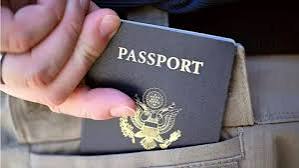
Mali and Burkina Faso on Tuesday announced reciprocal visa restrictions on United States citizens in response to Washington’s recent expansion of travel bans to include the two Sahel states.
The decisions follow a White House move that placed Mali and Burkina Faso on a list of countries facing tightened entry requirements from January 1, 2026. Both West African governments described the U.S. measures as abrupt and lacking prior diplomatic consultation.
Mali’s Ministry of Foreign Affairs said the United States’ security rationale did not align with the on-the-ground situation and signalled that Bamako would mirror Washington’s conditions for Malian travellers. “In application of the principle of reciprocity, the Government of the Republic of Mali will apply, with immediate effect, to American nationals the same conditions and requirements as those imposed on Malian citizens,” the ministry declared.
In a similar move, Burkina Faso’s foreign minister, Karamoko Jean-Marie Traoré, announced equivalent restrictions and criticised the U.S. action as inconsistent with sovereign equality and mutual respect. Traoré said Ouagadougou had taken note of the White House announcement of December 16 and would respond in kind.
The U.S. government has defended the policy as a national-security measure aimed at addressing perceived weaknesses in identity management, information sharing and visa-overstay controls in affected countries. The expansion adds Mali and Burkina Faso to a broader slate of nations subject to full or partial entry bans.
Both Sahel states are currently under military administrations following recent coups, a factor that has strained relations with several Western partners over governance and security cooperation. Officials in Bamako and Ouagadougou said the reciprocal measures should not be interpreted as a rejection of cooperation, but stressed that future engagement must be conducted on the basis of equality and reciprocal respect.
Analysts warn the dispute could complicate international efforts to tackle instability in the Sahel, where counter-terrorism and humanitarian cooperation remain pressing priorities. Diplomatic channels remain open, but both capitals have signalled they will defend national dignity and respond firmly to policies they regard as unilateral.