
A Nigerian student, Owolabi, has been carefully deleting old posts on his social media accounts as concerns grow over the U.S. government’s tougher screening of visa applicants’ online activity.
As reported by Japan Times, the 23-year-old recently gained admission to the University of New Haven in Connecticut for a master’s program in cybersecurity.
But he’s now unsure about what he can or can’t post online, following a new directive under President Donald Trump’s administration that pauses visa appointments and introduces stricter checks on applicants’ social media history.
“I’m afraid of saying the wrong thing,” Owolabi said. “It feels like everything I post is being watched.”
Just before he was about to book his visa interview at the U.S. embassy in Abuja, news broke that all student visa appointments were being suspended temporarily.
The move came after U.S. Secretary of State Marco Rubio announced plans to expand social media vetting of international students.
Each year, around 50,000 students from sub-Saharan Africa travel to the U.S. for their studies.
In 2024, Nigeria alone accounted for about 20,000 of those students — the highest number from any African country.
The U.S. remains a popular destination due to the educational and career prospects it offers international students.
But the new policy has sparked concern. Rubio ordered embassies to halt new student visa appointments in May, pending a review of how applicants’ online behavior is assessed.
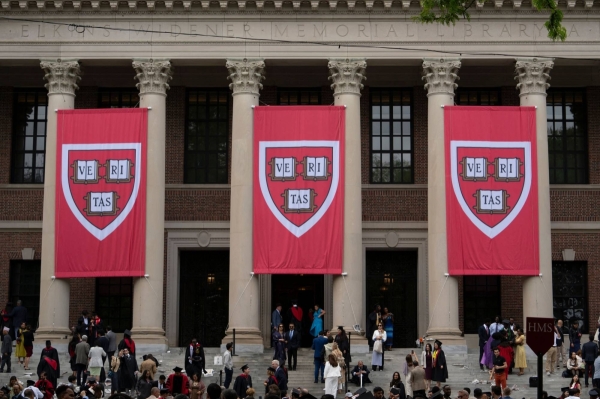
The policy is part of a wider crackdown on immigration, with growing fears that visa denials and deportations of international students could rise. Even prestigious institutions like Harvard University have come under fire. Earlier this month, a U.S. judge temporarily stopped Trump from blocking foreign students from entering the country to study at the Ivy League school.
The White House says the new rules are part of efforts to protect national security. Since 2019, most U.S. visa applicants have been required to provide their social media handles.
However, digital rights experts say this latest move pushes the boundaries of surveillance and threatens online freedom.
“This level of scrutiny could set a dangerous global precedent,” said Khadijah El-Usman, a digital rights lawyer with the Paradigm Initiative, a pan-African tech organization.
She explained that innocent comments or jokes on platforms like X (formerly Twitter) or Facebook could be misunderstood and used to deny visas.
“There’s a risk that people will be punished for expressing opinions or sharing political satire,” she warned.
The concern isn’t just about the U.S. El-Usman and others fear that if this kind of surveillance becomes common, other countries might adopt similar measures.
Mojirayo Ogunlana, who leads Nigeria’s DiGiCiVic Initiative, questioned how far such profiling could go.
“If someone asks online why the U.S. supports Israel, does that make them a threat?” she asked. “Will that stop them from getting a visa?”
Ogunlana added that many young people may begin to self-censor—only posting content that seems to align with U.S. political and religious views—out of fear that it might affect their chances of studying abroad.
“This limits freedom of speech and expression globally,” she said.
Barbadian student Blackman, who lives in Bridgetown, also deleted his X and Facebook accounts after being informed that his visa application was on hold.
The 20-year-old, accepted into a pharmacy master’s program at the University of Massachusetts, is still waiting for updates. His classes start in August.
“Social media gave people like me a voice,” he said.
“Now, it feels like I’m being silenced and watched.”