

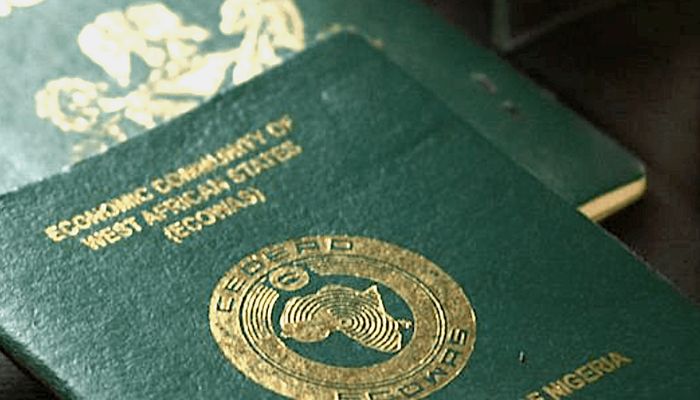
Nigerians across Germany, Switzerland and several other countries in Europe and North America have called on the Federal Government to urgently reform the National Identification Number and passport processing systems at foreign missions,
They lamented high charges, prolonged delays and what they described as widespread dissatisfaction with current services.
The appeal was contained in a joint statement released by three prominent Diaspora bodies, the International Advocacy for Human Rights and Anti-Corruption, Concerned Nigerians in Germany and the Nigeria Business Forum, Switzerland.
The document was signed by Okoro Akinyemi of IAHRAC, Lewis Ehiwario of Concerned Nigerians in Germany and Dozie Ugochokwu of the Nigeria Business Forum.
According to the organisations, their position followed the publication of a comprehensive report compiled after months of engagements with Nigerian communities in multiple countries.
They said the findings were based on a strategic meeting and a cross-country survey intended to highlight recurring bottlenecks and capture the lived experiences of citizens seeking to obtain or verify their NIN or renew their passports abroad.
“Many Nigerians abroad frequently face prolonged delays and additional travel burdens while trying to obtain or verify their NIN. Applicants reported systemic obstacles that make timely processing extremely difficult,” the statement said, noting that many applicants are forced to travel long distances at substantial personal cost.
The groups described the current NIN registration method as fundamentally defective, particularly the government’s reliance on private agents.
They argued that the involvement of intermediaries has resulted in inconsistent procedures, unstable processing timelines, irregular charges and, in some cases, fears of exploitation of applicants.
They maintained that Nigerian embassies and consulates should be adequately empowered to deliver transparent and efficient identity services.
“Embassies require strengthened digital infrastructure capable of managing increased service demand and expanded responsibilities,” the groups stated, adding that citizens should have access to both passport and NIN services in one location to eliminate duplication and reduce logistical strain.
Beyond short-term fixes, the groups proposed a fully digital NIN system that Nigerians can use from any part of the world without intermediaries.
They further recommended the introduction of mobile registration units in major cities abroad to ease the burden on applicants, especially those residing far from embassies and consulates.
They urged the Federal Government to improve funding for foreign missions, upgrade equipment, recruit more staff and provide clearer immigration guidelines to restore public trust in the identity management system.
The organisations cautioned that failure to act swiftly would leave millions of Nigerians abroad grappling with persistent difficulties in accessing essential identity documents needed for civic participation, financial services and legal recognition.