

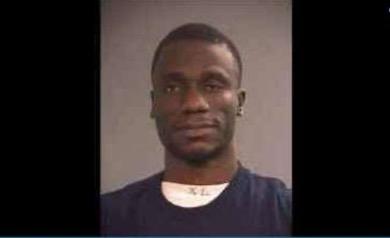
The administration of United States President, Donald Trump, has commenced moves to strip a Nigerian national, Oluwatosin Kazeem, of his American citizenship over his involvement in a multi-million dollar tax fraud scheme.
Kazeem was convicted for orchestrating a large-scale identity theft operation that enabled him to fraudulently obtain about $12 million in tax refunds using stolen personal data belonging to thousands of U.S. citizens.
The decision marks a reversal from the clemency granted by former U.S. President, Joe Biden, who reduced Kazeem’s 15-year prison sentence to six years in December 2024 after his conviction and sentencing between 2015 and 2018.
However, the current administration has moved to denaturalise him, insisting that individuals who obtained citizenship through fraudulent means should not be allowed to retain such status.
According to the U.S. Department of Justice, Kazeem’s case was further worsened by evidence that he entered into fraudulent marriages with two American citizens to secure permanent residency, a development officials say independently qualifies him for citizenship revocation.
An Assistant Attorney General, Brett A. Shumate, stated that the government would continue to pursue legal action against individuals who secured citizenship through deception.
He said, “The Trump administration will not allow individuals who were never eligible for U.S. citizenship to continue enjoying that privilege. We will seek to revoke any status obtained through fraud.”
Investigations into Kazeem’s activities began in 2013 after victims in Oregon reported that their identities had been used to file fraudulent tax returns.
Further findings by the Internal Revenue Service revealed that Kazeem had acquired over 90,000 stolen identities from a foreign hacker and used them to file fake tax returns, bypassing verification systems to secure refunds.
Authorities said he initially aimed to defraud the government of $91 million but successfully obtained about $11 million between 2012 and 2015.
Part of the illicit funds was reportedly transferred to Nigeria, where he invested in building a luxury hotel in Lagos valued at over $6 million, while also purchasing properties in Maryland.
Kazeem was later arrested after attempting to conceal his assets by transferring ownership of some properties to relatives, before being convicted on multiple counts, including mail fraud, wire fraud, identity theft, and conspiracy.