

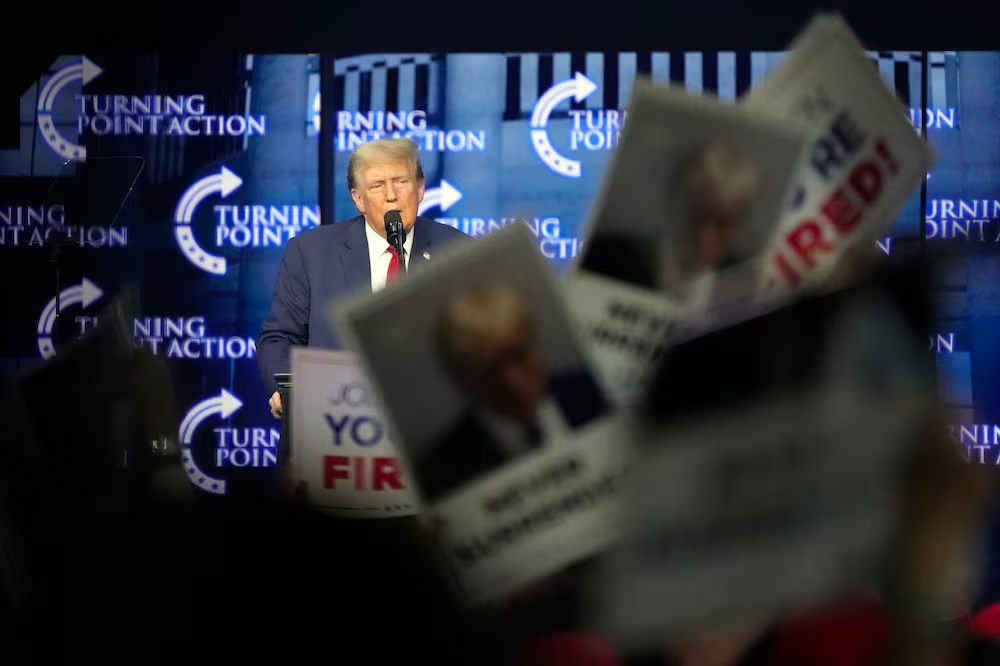
As former U.S. President Donald Trump pushes policies centered on economic nationalism, protectionism, and deglobalization, concerns are mounting over the future of trade relations between Nigeria and other African nations under the African Growth and Opportunity Act (AGOA).
Retaliatory trade measures from various countries have further complicated global trade dynamics, raising questions about the continuity of AGOA and its impact on African economies.
Concerns Over Deportation and Diaspora Remittances
The Nigerian government has urged the U.S. to adhere to international protocols in the deportation of immigrants. Minister of State for Foreign Affairs, Bianca Odumegwu-Ojukwu, voiced concerns about the potential impact on Nigerians facing repatriation and their families who depend on their financial support.
Speaking during a meeting with U.S. Ambassador to Nigeria, Richard Mills Jr., in Abuja, Odumegwu-Ojukwu emphasized the need for humane treatment of deportees and adequate time for them to manage their assets before leaving the U.S.
“With the new administration’s stance on immigration, we seek commitments to ensure a dignified return for affected Nigerians. Reports indicate that about 201 Nigerians are currently in U.S. immigration camps, with 85 already cleared for deportation. Many of these individuals have families in Nigeria who rely on their remittances for survival and education,” she stated.
The potential decline in Diaspora remittances due to stricter immigration policies is another growing concern.
The U.S. hosts an estimated 500,000 Nigerians, many of whom may be affected by changes in documentation requirements. A significant reduction in remittances could have far-reaching economic consequences, especially for households dependent on funds sent from abroad.
AGOA and Trade Implications for Nigeria
Dr. Muda Yusuf, CEO of the Centre for the Promotion of Private Enterprise (CPPE), warned that the Trump administration’s trade policies could lead to the termination of AGOA, although Nigeria has not significantly benefited from the agreement.
He, however, noted that Nigeria could take advantage of the disruptions in global trade by positioning itself as an alternative supplier in markets affected by the U.S.-China tariff war.
“There is also the potential for increased inflation in the U.S. due to trade restrictions, which could lead to imported inflation in Nigeria. Nigerian businesses must explore new bilateral and multilateral trade alliances to fill gaps in the global supply chain,” Yusuf explained.
Impact on USAID and Healthcare Programs
In addition to trade concerns, the Nigerian government is responding to the U.S. administration’s shift in foreign aid policies, particularly regarding healthcare funding.
Coordinating Minister of Health and Social Welfare, Ali Pate, revealed that Nigeria is preparing to absorb 28,000 health workers previously employed under U.S. government-funded programs, including the United States Agency for International Development (USAID).
The Trump administration recently paused funding for HIV treatment in developing nations as part of broader cuts to foreign aid. This decision has affected the operations of USAID and other U.S.-funded interventions, including the President’s Emergency Plan for AIDS Relief (PEPFAR), which has provided HIV treatment for over 20 million people worldwide, including 566,000 children under the age of 15.
Amid these policy shifts, the Nigerian government has reaffirmed its commitment to strengthening its healthcare sector and ensuring continued support for affected patients.
Calls for Policy Clarifications
The Federal Government has also expressed concerns over the potential suspension of the U.S. Drop Box Visa System, which allows frequent travelers to renew visas without an interview.
Odumegwu-Ojukwu urged the U.S. government to clarify its position on the policy to alleviate uncertainties among Nigerians. She stressed the need for strategic partnerships to address issues such as unemployment and illegal migration, which have contributed to increased emigration from Nigeria.
Despite the challenges posed by recent U.S. policy changes, both governments have reiterated their commitment to maintaining strong diplomatic and trade relations.
However, Nigeria continues to push for a balanced approach that safeguards the interests of its citizens both at home and abroad.