

A United Kingdom-based Nigerian academic, Akin Iwilade, has highlighted major factors responsible for the rejection of scholarly articles, urging researchers to prioritise quality and rigorous methodology.
Iwilade, a senior lecturer at the University of Edinburgh, said credible academic publishing is rooted in sound scholarship, stressing that publication is only the final stage of a detailed research process.
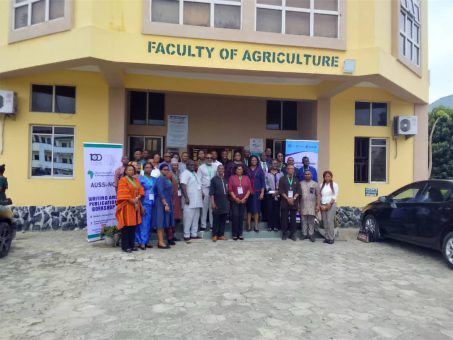
He spoke on the topic, “What editors and book reviewers want from scholars,” at a two-day paper review workshop organised under the African University Seminar Series Nigeria, held at the University of Port Harcourt.
According to him, quality research begins with the collection of original empirical data, adherence to ethical standards, and the use of appropriate research tools.
He cautioned scholars against excessive reliance on artificial intelligence-generated content, media reports, and exaggerated claims derived from interviews, noting that such practices weaken the credibility of academic work.
The associate professor of African Studies at the School of Social and Political Science further advised researchers to build expertise in specific areas over time, explaining that sustained focus improves research depth and increases the chances of acceptance by reputable journals.
He urged academics to concentrate on producing impactful and publishable research rather than being preoccupied with targeting high-impact journals.
“If your focus is solely on publishing in top-rated journals, you may have missed the essence. The priority should be doing sound scholarship, after which publication in reputable outlets will follow naturally,” he said.
In his remarks, the Programme Director of the Social Science Research Council’s African Peacebuilding and Development Dynamics initiative, Cyril Obi, described the establishment of the Nigerian chapter of the seminar series as a significant development.
He noted that the initiative builds on the council’s longstanding commitment to advancing social science research and supporting emerging scholars across Africa.
Obi added that the programme, which evolved from earlier platforms such as the African Peacebuilding Network and the Next Generation Social Sciences in Africa, has supported hundreds of scholars through fellowships and mentorship.
Also speaking, a member of the organising committee, Jimam Tilar of the University of Jos, said the workshop was designed to help participants refine their manuscripts following earlier training sessions on academic writing and publishing.
He explained that the focus on conflict studies was intended to promote solution-driven research and peacebuilding efforts in Nigeria.
Earlier, the Vice-Chancellor of the University of Port Harcourt, Qwunari George, commended the organisers for fostering academic excellence and encouraging scholars to produce impactful research.
He urged participants to take full advantage of the training, noting that academic writing remains a powerful tool for education, innovation and societal transformation.