

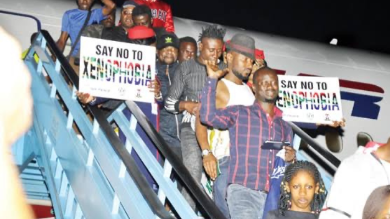
The Nigerian Union South Africa has called on the Federal Government to establish a special entrepreneurship fund to support Nigerians repatriated from South Africa following renewed xenophobic attacks.
The union’s National Publicity Secretary, Akindele Olunloyo, made the appeal while responding to enquiries, urging President Bola Tinubu’s administration to introduce a “Returnee Entrepreneurs Fund” to help affected Nigerians rebuild their lives and businesses after returning home.
Olunloyo said the government should provide emergency financial support, temporary accommodation, medical care and psychological counselling for victims of the attacks, alongside a comprehensive repatriation programme for citizens willing to return to Nigeria.
He also called for long-term reintegration measures, including vocational training, business grants, interest-free loans, tax incentives and support for children whose education had been disrupted.
According to him, a dedicated desk should also be created within the Nigerians in Diaspora Commission to coordinate the affairs of returnees.
The union further urged the Federal Government to strengthen diplomatic engagement with South Africa by using existing economic and bilateral ties to ensure better protection for Nigerians living in the country, while also increasing resources and personnel at Nigeria’s diplomatic mission.
Despite the challenges, Olunloyo commended the government’s ongoing evacuation efforts, noting that hundreds of Nigerians had already been repatriated from South Africa since the latest wave of attacks began.
He disclosed that 258 Nigerians returned home on June 11, another 66 on June 24, while 271 others were evacuated on June 29.
He added that about 400 more citizens had completed registration and obtained clearance to return, with others in remote provinces still indicating interest in repatriation.
Describing the situation in South Africa as “cautiously tense but relatively stable,” Olunloyo said many Nigerians continued to face hostility, business disruptions and insecurity.
He attributed the attacks to economic hardship, negative stereotyping and the failure of South African authorities to address underlying social challenges, insisting that Nigerians were being unfairly blamed for problems they did not create.