

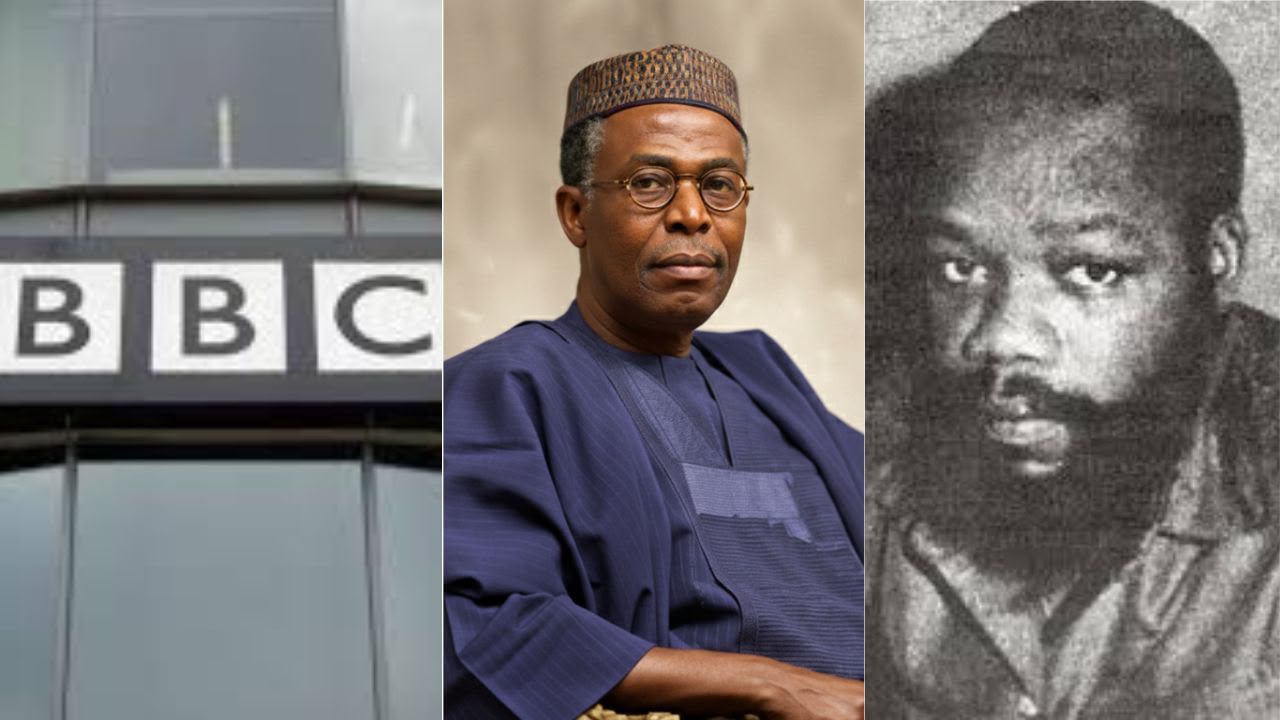
The British Broadcasting Corporation (BBC) published a documentary five days ago titled “Surviving Biafra”. The documentary interviewed several eyewitnesses to the Biafran War who are still alive. The video contained footage from the BBC’s archive on the Nigerian conflict. The documentary aimed to remind Nigerians of the many losses of the war, particularly from the perspective of those who survived and are still living. One aspect of the Nigerian Civil War that never goes away is the issue of the starvation that befell the Biafran people. Steve Jobs, the late founder of Apple, is famously known to have renounced religion after he saw starving children in Biafra on American television, many of them racked by kwashiorkor.
The makers of the documentary narrated their story to show that the Nigerian government of the time, led by Major General Yakubu Gowon, had employed starvation as a weapon of war. Chief Obafemi Awolowo was the Commissioner of Finance under the Gowon regime, and he was also the deputy Chairman of the Supreme Ruling Council in Nigeria. At timeline 1:02:37 on the video, the BBC inserted a short clip of Awolowo saying “But we are certainly not going to end the war on account of people being starved. All is fair in war, so we are told, and that is the position…”
The person interviewing Awo then asked: “The plight of the civilians is not the number one priority?” Awolowo replied him: “The number one priority is the unity of the nation.” It cannot be disputed that Awolowo did not say “…all is fair in war…”, but every statement is made within a context: a historical, situational, and even environmental context. Thankfully, Obafemi Awolowo responded to this allegation of starving the Igbos himself. Before the 1983 Presidential elections and in the heat of campaigning, Awolowo provided the following explanation:
“…Then, but above all, the ending of the war itself, which I’m accused of, accused of starving the Ibos, I did nothing of the sort. You know, shortly after the liberation of these places, Calabar, Enugu and Port Harcourt, I decided to pay a visit. There are certain things which I know you don’t know, which I don’t want to say here now; when I write my reminiscences in the future, I will do so. Some of the soldiers were not truthful with us; they didn’t tell us the correct stories and so on. I wanted to be there and see things for myself… But when I went, what did I see? I saw the kwashiorkor victims. If you see a kwashiorkor victim, you’ll never like war to be waged. Terrible sight, in Enugu, in Port Harcourt, not many in Calabar, but mainly in Enugu and Port Harcourt. Then I enquired what happened to the food we were sending to the civilians. We were sending food through the Red Cross and CARITAS to them, but what happened was that the vehicles carrying the food were always ambushed by the soldiers. That’s what I discovered, and the food would then be taken to the soldiers to feed them, and so they were able to continue to fight. And I said that was a very dangerous policy; we didn’t intend the food for soldiers. But who will go behind the line to stop the soldiers from ambushing the vehicles that were carrying the food? And as long as soldiers were fed, the war would continue, and who would continue to suffer? And those who didn’t go to the place to see things as I did, you remember that all the big guns, all the soldiers in the Biafran army looked all well fed after the war, it’s only the mass of the people that suffered kwashiorkor… You won’t hear of a single lawyer, a single doctor, a single architect who suffered from kwashiorkor? None of their children either, so they waylaid the foods, they ambushed the vehicles and took the foods to their friends and to their collaborators and to their children, and the masses were suffering. So I decided to stop sending the food there. In the process, the civilians would suffer, but the soldiers would suffer most…”
In other words, the situation of starving children was already existing and quite evident in Eastern Nigeria long before the policy of the Nigerian government that stopped the sending of aid to Eastern Nigeria. It was very clear that if the government continued to send aid to the East, the Biafran soldiers would confiscate them to themselves. The humanitarian situation in the East would increase. The outcry against Nigeria will increase, and the war will stretch, leading to more losses in both lives and the resources the country was expending on something that was clearly destructive and not constructive.
Awolowo’s argument, as depicted in some of his other writings, was that the British had bequeathed a united Nigerian nation to us at Independence. He and his generation would be doing future generations of Nigerians a great disservice if they allowed politics to fracture the country. But, again, was the statement “…all is fair in war…” made in good faith?
The sentiment that “…all is fair in war…” was first written by the English writer John Lyly in his 1578 novel titled “EUPHUES”. There he wrote: “…the rules of fair play are not applied in love and war”. The 19th-century English novelist Frank Edward Smedley also used the phrase in his book titled “Frank Fairleigh”. Long before these two, though, Niccolo Machiavelli had written that rulers might need to set aside conventional morality to preserve the state, especially during war, and Carl von Clausewitz had taught that war was an extension of politics with other means.
So, when Awolowo said “…all is fair in war, so we are told…”, he was gleaning from his massive reading and the wisdom of the ages and showing where extreme measures were employed to achieve greater good in societies. The number one outcry against all wars in all ages is usually the casualties that follow those conflicts. The press does not help the conflict with the publishing of videos and photos that soothe the narrative of a certain set of people, but even more importantly, this is the reason why each side must count the cost very carefully before they embark on a war.
Perhaps more than providing an explanation to the words of Chief Obafemi Awolowo, it might also be important to discern the motives of some international media houses with regard to solving the socio-political problems of our nation. There is a narrative that is becoming increasingly accepted among foreign media, and this has to do with the idea of rehearsing the victimization of the Igbos during the Nigerian civil war.
Rather than solving a country’s problem, these media houses appear to want to continually stoke the embers of discontent among Nigerian people. What is very clear historically is that the Nigerian civil war did not happen in isolation. It was a conflict that had been brewing since the 1930s. This then became pronounced after Nigeria had gained independence from the British. Northern Nigeria and the Eastern parts of the country came into coalition with each other to wrest power from the western part of the country, then led by Chief Obafemi Awolowo.
The politics also led to Awolowo’s imprisonment. Even after the January 1966 coup, Eastern Nigeria had the opportunity to bring Awolowo into its team by releasing him from prison. They did not do this. Following the counter-coup of July 1966, Awolowo was released from prison by the Yakubu Gowon government, and that set the stage for him to team up with the North.
Obafemi Awolowo and other nationalists bequeathed the concept of federalism to Nigeria. The idea suggests that Nigeria is a conglomerate of nations and that a federal system of government will permit the various nations to co-exist. Documentaries like the one the BBC published are not helping the Nigerian federalist system because they sow the seed of distrust among these various nations. Nigeria has too much trouble at the moment for it to add the victimization of the civil war to its national problems.
If Biafra had succeeded in the late 1970s, other parts of the country would have gone their separate ways, with many of them plunged into continual civil strife. Federalism informs each nation within the conglomerate of the Nigerian nation to bring its best foot forward as the country trudges on towards a desired future. Each part of the country has something positive it can bring to the overall national quest.
Hopefully, in the days to come, Nigerians can come up with such visionary leadership that will help harness the various strengths of the different nations that make up the Nigerian country. Until then, we must reject ideas that seek to pitch different parts of the country against each other. The BBC documentary could still have published stories around survivors of the Nigerian civil war without betraying the lies of victimization that some people in Nigeria love to run around with.
If we were to begin to narrate stories of victimization in Nigeria, the country would not move forward. The number one reason Eastern Nigeria failed in its secessionist quest was that there were many ethnic groups, nations themselves, in that part of the country that did not buy into the Biafran ideas of Col. Emeka Ojukwu and others. Those people teamed up with Nigeria to defeat Biafra. They did it because they felt the Igbos were victimizing them. When it comes to the question of victimization, everyone has a tale to tell. The BBC will do well to face the myriads of problems in Britain and other parts of the Western world, and leave Nigeria alone.
𝗪𝗿𝗶𝘁𝘁𝗲𝗻 𝗯𝘆 𝗗𝗲𝗷𝗶 𝗬𝗲𝘀𝘂𝗳𝘂
Deji Yesufu is the pastor of Providence Reformed Baptist Church Ibadan. He is the author of HUMANITY. He can be reached at naijareformed@gmail.com
Source: https://textandpublishing.com/obafemi-awolowo-bbc-lies-and-biafra/



 published a documentary five days ago titled “Surviving Biafra”. The documentary)